
When searching for a new home, most buyers focus on the location, amenities, and price. However, there’s another factor that can have a major impact on your buying decision—the way a property’s area is measured.
You may come across terms like Carpet Area, Built-Up Area, and Super Built-Up Area in brochures and property listings. At first glance, they might seem like technical real estate jargon, but understanding them is crucial if you want to know the actual space you’re getting.
Imagine comparing two apartments with similar prices and the same advertised size. One offers a larger living area, while the other allocates more space to walls, balconies, and common facilities. Without understanding these area calculations, it’s easy to make the wrong comparison.
That’s why every homebuyer should know the difference between Carpet Area, Built-Up Area, and Super Built-Up Area. In this guide, we’ll explain what each term means, what is included in the calculation, and how these measurements can influence the value of your investment.
Table of Contents
How Understanding Area Calculations Helps Homebuyers
Understanding Carpet Area, Built-Up Area & Super Built-Up Area helps homebuyers accurately evaluate the actual space they are getting. It also allows better comparison between different residential projects and prevents misleading marketing claims.Knowing the difference between Carpet Area, Built-Up Area & Super Built-Up Area allows homebuyers to accurately evaluate a property’s value. This knowledge helps buyers compare projects effectively, make informed decisions, and avoid paying for space they may never actually use.
What Is Carpet Area?
Definition of Carpet Area
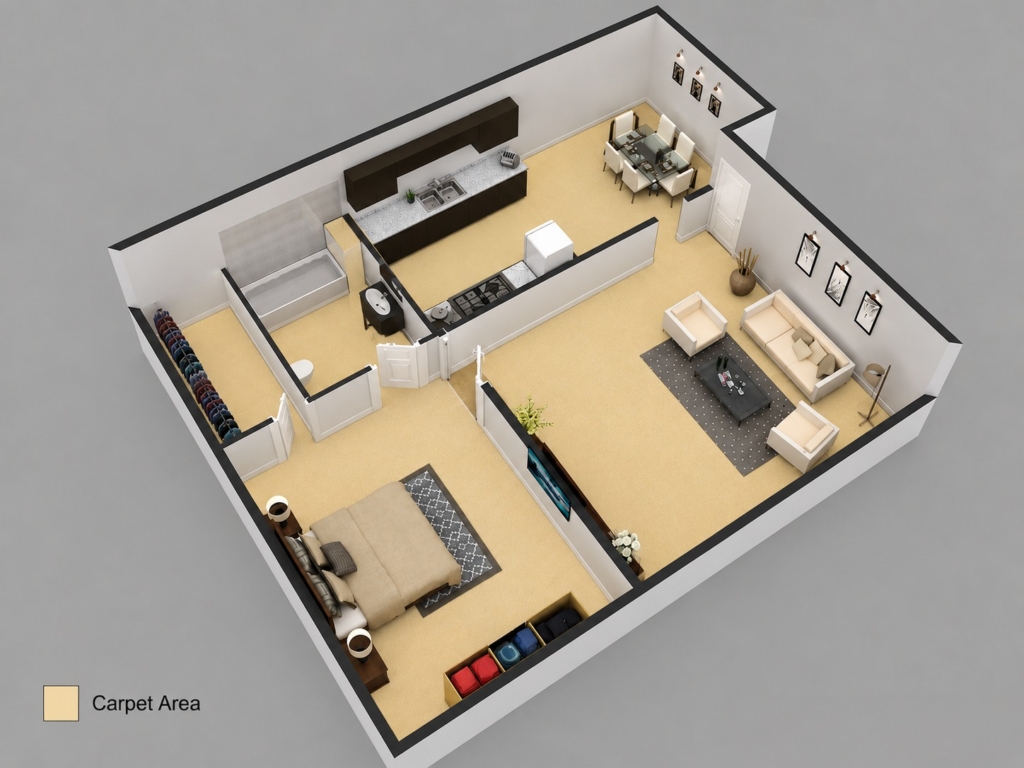
Before evaluating a property, it is important to understand Carpet Area, Built-Up Area & Super Built-Up Area. Carpet Area refers to the actual usable floor space inside a home where a carpet can be laid.
What Is Included in Carpet Area?
Carpet Area includes all the usable spaces inside the apartment.
Bedrooms
The floor area of all bedrooms is included in the Carpet Area.
Living Room
The usable space within the living room or drawing room forms part of the Carpet Area.
Kitchen
The entire internal floor area of the kitchen is included in the Carpet Area.
Bathrooms
Bathrooms and toilets are also considered part of the Carpet Area.
What Is Excluded from Carpet Area?
Certain areas are not included in Carpet Area calculations.
Balconies
Balconies, terraces, and open spaces are excluded from Carpet Area.
External Walls
The thickness of external walls is not counted in Carpet Area.
Common Areas
Shared spaces such as corridors, staircases, lift lobbies, and other common facilities are excluded.
Carpet Area Under RERA
Under the Real Estate (Regulation and Development) Act (RERA), developers are required to disclose the Carpet Area of a property clearly. This ensures transparency and allows buyers to understand the actual usable space they are purchasing. Today, Carpet Area is considered the most important measurement when comparing residential properties.
What Is Built-Up Area?
Definition of Built-Up Area
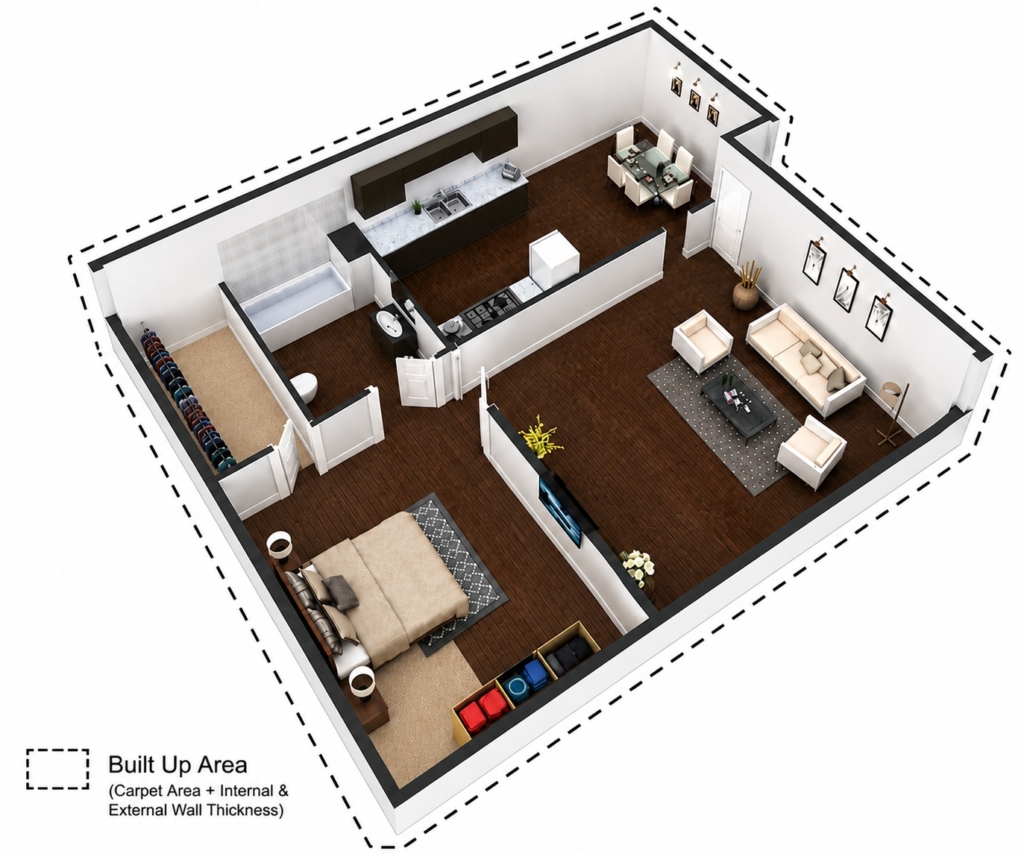
Built-Up Area is larger than Carpet Area because it includes the Carpet Area along with the thickness of walls and certain additional spaces such as balconies.
Components Included in Built-Up Area
Carpet Area
The Carpet Area forms the foundation of the Built-Up Area calculation.
Internal and External Walls
The thickness of internal partitions and external walls is included in Built-Up Area.
Balconies and Utility Areas
Balconies, utility spaces, and attached terraces are also counted within the Built-Up Area.
In most residential projects, Built-Up Area is approximately 10% to 20% larger than the Carpet Area.
Also read-The Rise Of Offbeat Hospitality Destinations Near Jim Corbett
What Is Super Built-Up Area?
Definition of Super Built-Up Area
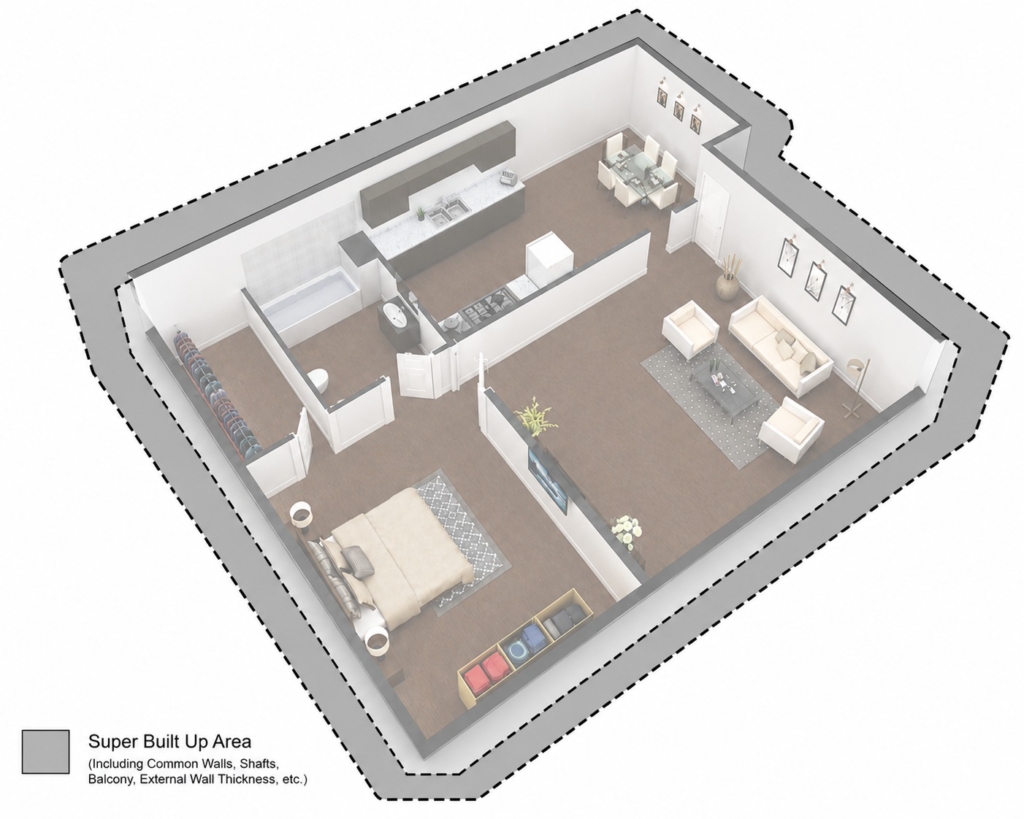
To properly understand Carpet Area, Built-Up Area & Super Built-Up Area, it is important to know that Built-Up Area is the Carpet Area plus the thickness of walls and additional spaces like balconies.
What Is Included in Super Built-Up Area?
Built-Up Area
The entire Built-Up Area is included in the Super Built-Up Area calculation.
Common Amenities
A proportionate share of the building’s common areas and amenities is added to the Built-Up Area.
Lobbies
Shared lobbies are included in the Super Built-Up Area.
Staircases
Staircases and circulation areas form part of the common area allocation.
Elevators
Lift shafts and elevator lobbies are included proportionately.
Clubhouse and Shared Facilities
Amenities such as clubhouses, gyms, swimming pools, and recreational spaces may also be included in the Super Built-Up Area.
This is why the Super Built-Up Area is significantly larger than the actual usable space available to residents.
Carpet Area vs Built-Up Area vs Super Built-Up Area
Quick Comparison Table
| Feature | Carpet Area | Built-Up Area | Super Built-Up Area |
|---|---|---|---|
| Actual Usable Space | Yes | Partially | No |
| Internal Rooms | Included | Included | Included |
| Wall Thickness | Excluded | Included | Included |
| Balconies | Excluded | Included | Included |
| Common Areas | Excluded | Excluded | Included |
| Commonly Used for Pricing | Rarely | Sometimes | Usually |
Area Components Included
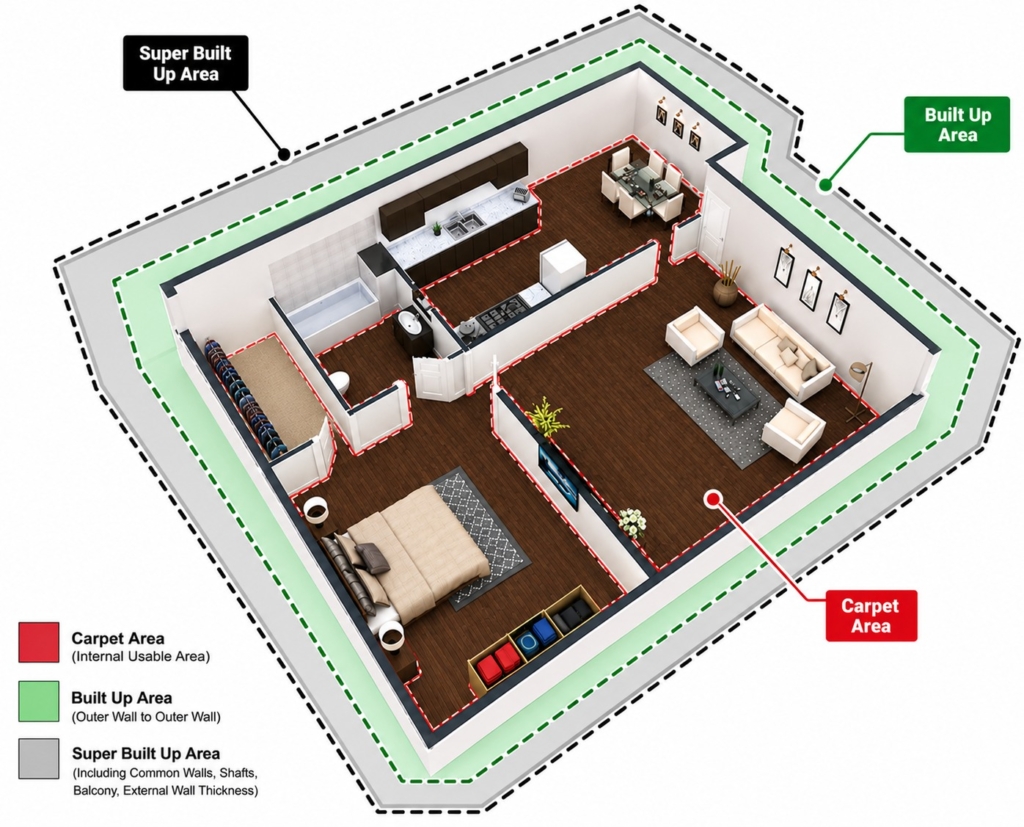
Carpet Area represents only the usable indoor space. Built-Up Area includes walls and balconies, while Super Built-Up Area includes a proportionate share of common facilities and amenities.
Usable Space Available
Carpet Area provides the most accurate representation of the actual living space available within a property.
Pricing Considerations
To understand the true cost and value of a property, buyers must be aware of the differences between Carpet Area, Built-Up Area & Super Built-Up Area.
Common Mistakes Homebuyers Make While Evaluating Property Area
Focusing Only on Super Built-Up Area
Many buyers compare properties solely based on the Super Built-Up Area mentioned in brochures. This can create a misleading impression of the actual living space available.
Ignoring the Loading Factor
The loading factor refers to the percentage of common areas added to the Built-Up Area to calculate the Super Built-Up Area. A higher loading factor means less usable space for the buyer.
Not Checking RERA Disclosures
Failing to verify RERA disclosures is another common mistake. Buyers should always review the officially declared Carpet Area before making a purchase decision.
Tips for Homebuyers Before Making a Purchase
Verify Carpet Area in Documents
Always verify the Carpet Area mentioned in RERA-approved documents and property agreements.
Compare Properties Based on Usable Space
When evaluating multiple projects, compare them based on Carpet Area rather than solely on Super Built-Up Area.
Understand Common Area Charges
Be aware of maintenance costs and charges associated with shared amenities and common spaces.
Review Builder Specifications Carefully
Carefully review brochures, floor plans, and legal documents. Ensure that the figures for Carpet Area, Built-Up Area & Super Built-Up Area are clearly stated and accurately represented.
Conclusion
Buying a property is one of the most significant financial decisions in a person’s life. Therefore, understanding Carpet Area, Built-Up Area & Super Built-Up Area is essential for every homebuyer. It enables buyers to accurately assess a property’s value and avoid costly misunderstandings.
When you understand the difference between Carpet Area, Built-Up Area & Super Built-Up Area, you can make more informed purchasing decisions and avoid unexpected surprises. Always use Carpet Area as the primary benchmark when comparing properties, as it represents the actual living space you will enjoy. By doing so, you can select the right property within your budget and ensure greater transparency throughout the buying process.
At Square Foot Investors, we believe that an informed buyer makes the best investment decisions. Our team is committed to helping homebuyers and investors understand every aspect of real estate, from property measurements and legal documentation to investment opportunities in high-growth locations. Whether you are purchasing your first home, a second home, or an investment property, Square Foot Investors provides expert guidance and reliable insights to help you make confident and well-informed real estate decisions.
Frequently Asked Questions
Q1. What is the difference between Carpet Area and Built-Up Area?
Carpet Area is the actual usable space inside a home, while Built-Up Area includes the Carpet Area along with the thickness of walls and balconies.
Q2. What is Super Built-Up Area?
Super Built-Up Area is the Built-Up Area plus a proportionate share of common areas such as lobbies, staircases, elevators, and clubhouses.
Q3. Which area is considered under RERA?
Under RERA, the Carpet Area is the standard measurement used for property sales and disclosures.
Q4. Why is Carpet Area important for homebuyers?
Carpet Area shows the actual usable living space available inside the property, helping buyers make accurate comparisons.
Q5. How is Built-Up Area calculated?
Built-Up Area = Carpet Area + Area occupied by walls + Balconies/Utility Areas
Q6. Is a higher Super Built-Up Area always better?
Plot Area refers to the total land area owned by the property owner, including both built and open spaces.
Q9. Is Carpet Area and Plot Area the same?
No. Carpet Area is the usable floor space inside a building, whereas Plot Area is the total area of the land on which the property is built.