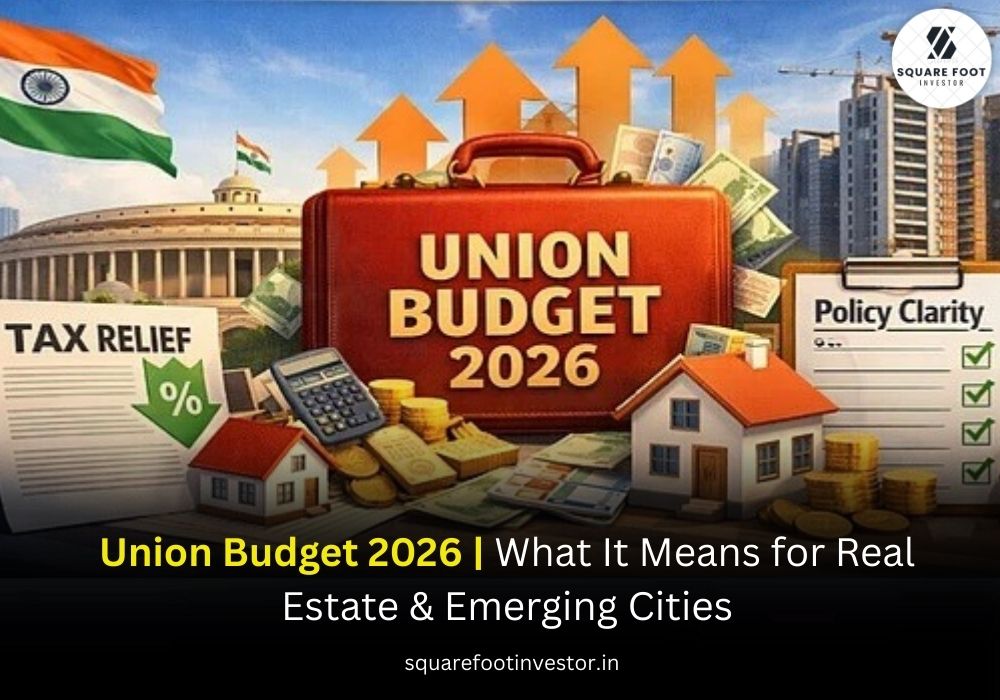
When the Union Budget is announced each year, the real estate market rarely reacts overnight. Property doesn’t work like stocks. There are no instant spikes, no dramatic swings the next morning. Instead, real estate moves quietly, sometimes frustratingly so—guided by confidence, infrastructure, and time.
Union Budget 2026 fits that familiar pattern.
At first glance, it feels calm. No dramatic tax breaks. No aggressive housing announcements. And yet, when you slow down and actually read between the lines, the direction becomes clearer. The Union Budget 2026 real estate impact is not loud—but it is deliberate.
From what I’ve seen across multiple market cycles, real estate responds better to steady policy than sudden incentives. In that sense, Budget 2026 continues a trend rather than trying to surprise anyone.
Table of Contents
Infrastructure Spending Sets the Long-Term Tone
One thing the government has been consistent about is infrastructure. Roads, logistics, railways, urban connectivity—these continue to receive serious funding.
The capital expenditure allocation crossing ₹12 lakh crore isn’t just a number on paper. On ground level, this is what slowly changes how people live, travel, and eventually decide where to buy property.
I’ve noticed something interesting over the years. The biggest real estate shifts don’t happen when a project is announced—they happen two or three years later, when people start using the infrastructure.
That’s why the Union Budget 2026 real estate impact is less about immediate pricing and more about shaping future demand.
Why Emerging Cities Matter More Than Ever
Metro cities are reaching saturation. Prices are high, space is limited, and daily life feels increasingly compressed. Buyers know this.
Union Budget 2026 doesn’t directly say “invest in Tier-2 and Tier-3 cities,” but the message is there. Decentralised growth, regional infrastructure, and better inter-city connectivity all support emerging markets.
Buyers I’ve spoken to recently aren’t chasing fast appreciation anymore. They’re asking different questions:
- Can I live here comfortably?
- Will this area improve over the next 5–10 years?
- Is the growth sustainable?
This is where the Union Budget 2026 real estate impact becomes more visible outside the metros.
Uttarakhand’s Quiet Rise in Real Estate Conversations
Uttarakhand doesn’t behave like a typical real estate market. Demand here is not driven by factories or IT parks. It’s driven by lifestyle, tourism, and second-home thinking.
Budget 2026’s emphasis on sustainable tourism, regional connectivity, and eco-sensitive development aligns naturally with hill states. In places like Kumaon, real estate growth depends heavily on access roads, regulated construction, and long-term planning.
From what I’ve personally observed, buyers looking at Uttarakhand are patient. They’re not flipping properties. They’re planning usage—family stays, rentals, or future retirement.
That’s why the Union Budget 2026 real estate impact in Uttarakhand feels subtle but meaningful.

Sustainability Is No Longer Just a Buzzword
A few years ago, sustainability sounded good in brochures. Today, it’s a real decision factor.
In environmentally sensitive regions, poor planning eventually shows its cracks—water issues, access problems, maintenance challenges. Buyers are more alert now.
The Union Budget 2026 real estate impact becomes stronger when sustainability is treated as infrastructure, not marketing. Especially in hill regions, projects that respect the land tend to age better.
And buyers notice.
Residential Demand Is Slowing—but Becoming Healthier
One thing is clear: today’s residential buyers are cautious.
Easy speculation has faded. Decisions are slower. Questions are sharper. That’s not a bad thing.
Union Budget 2026 supports this environment indirectly. By focusing on long-term growth rather than short-term stimulus, it encourages stable residential demand.
In practical terms, the Union Budget 2026 real estate impact supports usability-driven housing—homes people actually want to live in, not just trade.
What Investors Should Actually Pay Attention To
Budgets don’t create instant returns. They create conditions.
Smart investors understand that the Union Budget 2026 real estate impact plays out over years, not quarters. Emerging cities, tourism-led regions, and infrastructure-backed locations make sense only with patience.
From conversations I’ve had with serious investors, the focus is shifting:
- Clean titles
- Realistic timelines
- Location fundamentals
Developers Are Adjusting Their Playbooks
Developers, especially outside metro cities, are adapting. High-density towers are giving way to plotted developments, villas, and low-rise housing.
This shift aligns with buyer psychology and regional planning norms. In many ways, developer strategy today reflects the broader Union Budget 2026 real estate impact—build slower, build better, build for real use.
Looking Beyond a Single Budget
Real estate doesn’t change direction because of one budget. It responds to consistency.
Union Budget 2026 doesn’t promise overnight transformation. What it offers instead is continuity—infrastructure spending, regional growth, and sustainability-driven planning.
That consistency is often underestimated, but it’s exactly what property markets need.
Final Thoughts
Union Budget 2026 is not designed to excite the real estate sector with headlines. It’s designed to steady it.
For emerging cities and lifestyle-driven regions like Uttarakhand, that matters. Growth here will likely be gradual, demand-led, and infrastructure-supported.
The Union Budget 2026 real estate impact rewards those who think long-term, ask better questions, and are willing to wait.
In real estate, that patience often makes all the difference.
FAQs: Union Budget 2026 & Real Estate
Q1. Does Union Budget 2026 directly impact property prices?
No, the Union Budget 2026 real estate impact is indirect. It shapes long-term demand through infrastructure, connectivity, and policy stability rather than causing immediate price changes.
Q2. Is Union Budget 2026 beneficial for real estate investors?
Yes, but mainly for long-term investors. The budget supports steady growth by strengthening infrastructure and regional development instead of short-term incentives.
Q3. How does Union Budget 2026 affect emerging cities?
Emerging cities benefit the most due to improved roads, transport links, and decentralised development, making them attractive for future residential and lifestyle investments.
Q4. What is the Union Budget 2026 real estate impact on Tier-2 and Tier-3 cities?
The budget indirectly boosts Tier-2 and Tier-3 cities by encouraging regional growth, reducing metro pressure, and improving livability over the next 5–10 years.
Q5. Why is Uttarakhand gaining attention after Union Budget 2026?
Uttarakhand aligns well with Budget 2026 priorities like sustainable tourism, eco-friendly development, and better connectivity, supporting long-term real estate demand.