Buying land in Uttarakhand is a significant investment, whether you’re planning to build a home, develop a resort, or purchase agricultural land. However, before making any payment, one of the most important steps is verifying the property’s revenue records. This is where Khasra & Khatauni in Uttarakhand becomes essential.
Many land buyers focus only on the sale deed and registration, but experienced investors know that revenue records reveal the actual legal history of a property. Khasra & Khatauni in Uttarakhand helps buyers verify ownership, identify land classification, confirm survey details, and reduce the risk of future disputes.
In this guide, we’ll go beyond basic definitions and explain how these records are used in real estate transactions, what information they contain, and how you can use them to make informed investment decisions.
Table of Contents
What is Khasra and Khatauni?
One of the most common questions among property buyers is What is Khasra and Khatauni?
Although these documents are often mentioned together, they serve different purposes in the land revenue system.
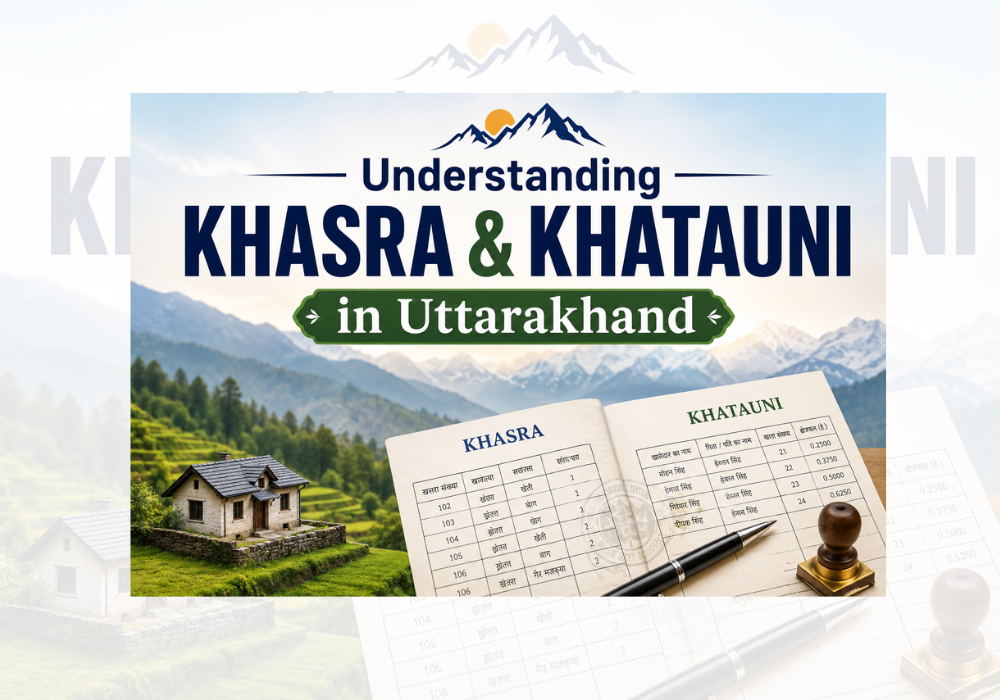
- Khasra identifies a specific parcel of land.
- Khatauni identifies the ownership details associated with one or more land parcels.
For anyone purchasing land in Uttarakhand, Khasra & Khatauni in Uttarakhand is one of the first steps towards safe property verification.
Khasra vs Khatauni: Key Differences
| Feature | Khasra | Khatauni |
| Purpose | Identifies a specific land parcel | Identifies land ownership |
| Records | Land details | Owner details |
| Contains | Khasra Number, area, land type, location | Owner’s name, share, land holdings |
| Used For | Identifying the property | Verifying ownership |
| Updated After | Survey and revenue changes | Mutation, inheritance, sale |
| Importance | Confirms land identity | Confirms legal ownership |
Understanding this distinction is critical because buyers often confuse land identification with ownership verification.
Why Understanding Khasra & Khatauni in Uttarakhand Matters
When investing in land, these records help answer several important questions:
- Is the seller the actual owner?
- Does the land exist exactly where it is being shown?
- Is the land agricultural or residential?
- Has the ownership been updated after previous transactions?
- Are there multiple owners?
Without Khasra & Khatauni in Uttarakhand, buyers may unknowingly purchase disputed or incorrectly represented property.
What Information Does a Khasra Record Provide?
A Khasra record is much more than a survey number. It provides valuable information about the land itself.
Typically, a Khasra record includes:
- Unique Khasra Number
- Village Name
- Tehsil
- District
- Total Land Area
- Land Classification
- Agricultural Details (where applicable)
- Boundary Information
- Revenue Record References
For investors buying large land parcels or resort land in Uttarakhand, these details help confirm that the property matches the seller’s claims.
Learn more about Uttarakhand’s land classification system in our detailed guide: Understanding Varg Ka, Kha, Ga & Gha.”
What Information Does Khatauni Contain?
While Khasra focuses on the land, Khatauni focuses on ownership.
A Khatauni generally includes:
- Owner’s Name
- Father’s/Husband’s Name
- Ownership Share
- Number of Land Parcels
- Linked Khasra Numbers
- Mutation Updates
- Revenue Account Details
This document helps buyers verify whether the person selling the land is legally authorised to do so.
How Khasra & Khatauni Work Together
Think of these documents as two pieces of the same puzzle.
- Khasra tells you which land you’re buying.
- Khatauni tells you who owns that land.
Only by checking both can buyers complete proper due diligence.
This is why professionals emphasise Khasra & Khatauni in Uttarakhand before signing any agreement.
Common Issues That Can Be Identified Through Revenue Records
Experienced investors use revenue records to identify problems before purchasing land.
Some common issues include:
Ownership Mismatch
The seller’s name may not match the latest Khatauni.
Multiple Owners
The property may require consent from several legal owners.
Incorrect Land Classification
Agricultural land may be incorrectly presented as residential or commercial.
Mutation Not Updated
Ownership may not have been legally transferred after an earlier sale.
Area Discrepancies
Actual land measurements may differ from what is advertised.
Understanding these issues is one of the biggest advantages of Khasra & Khatauni in Uttarakhand.
How to Verify Khasra & Khatauni Before Buying Land
Before making any investment, buyers should follow a structured verification process.
| Verification Step | Why It Matters |
| Verify Khasra Number | Confirms the exact land parcel |
| Match Khatauni Owner | Ensures legal ownership |
| Check Land Area | Prevents area disputes |
| Verify Mutation | Confirms updated ownership |
| Confirm Land Classification | Avoids legal restrictions |
| Compare Sale Deed | Ensures document consistency |
| Verify Physical Location | Confirms actual property boundaries |
Following these checks significantly reduces investment risk.
To understand land measurement and area calculations in Uttarakhand, read our complete guide on Land Measurement Units in Uttarakhand – Complete Guide.
Mistakes Buyers Should Avoid
Many first-time buyers skip important verification steps.
Avoid these common mistakes:
- Trusting only photocopies of documents.
- Not comparing Khasra with the sale deed.
- Ignoring ownership updates in Khatauni.
- Purchasing land without checking mutation records.
- Assuming all agricultural land can be converted for residential use.
- Relying only on verbal assurances from brokers.
A proper understanding of What is Khasra and Khatauni helps buyers avoid these costly errors.
How Revenue Records Support Safe Property Investment
For serious investors, revenue records are more than legal documents—they are risk management tools.
They help:
- Verify ownership authenticity.
- Confirm land identity.
- Support legal due diligence.
- Reduce chances of fraud.
- Simplify future registration.
- Improve financing eligibility.
- Increase buyer confidence.
This is why Khasra & Khatauni in Uttarakhand is considered a fundamental part of land investment.
Why Professional Verification Matters
Although many land records are available online, interpreting them correctly often requires practical knowledge of revenue terminology, mutation history, and local land regulations.
Professional property consultants can assist with:
- Document verification
- Ownership validation
- Site verification
- Land use assessment
- Legal coordination
- Investment guidance
This becomes especially valuable when purchasing resort land, agricultural land, or premium plots in Uttarakhand.
How to Check Khasra & Khatauni on Bhulekh Uttarakhand?
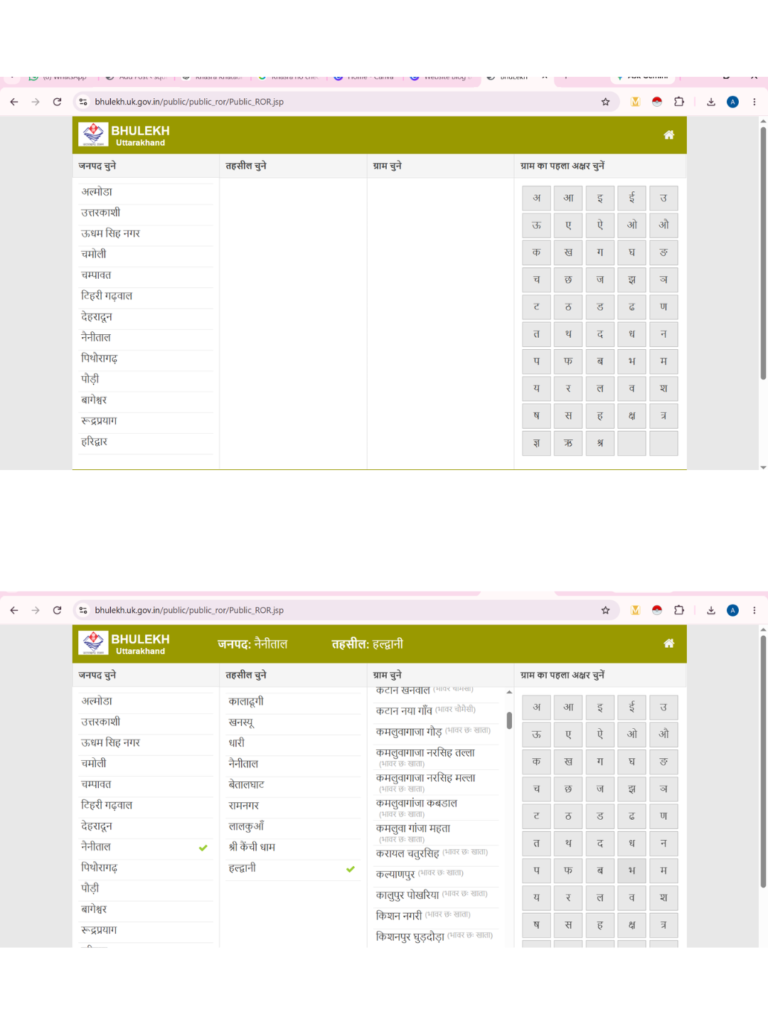
The general process involves selecting the relevant district, tehsil and village, followed by searching the available land record using information such as the Khasra number, Khata number or owner’s name.
After locating the record, users can review the available land and ownership-related information. The details can then be compared with other relevant property documents for a more complete understanding of the land record.
Bhulekh Uttarakhand is the official online platform used to access and view land records of properties in Uttarakhand.
Note: Online revenue records are an important source of land information, but they should be understood alongside title documents, registered deeds, mutation records and other applicable records when assessing a property’s legal status
Read More- What is RERA and How to Check RERA Registered Projects?
Conclusion
For anyone planning to invest in land, Khasra & Khatauni in Uttarakhand is not simply about learning two legal terms—it is about protecting your investment. These revenue records provide crucial insights into ownership, land identity, classification, and transaction history, enabling buyers to make informed decisions with greater confidence.
Rather than relying solely on registration documents or verbal assurances, every buyer should verify both Khasra and Khatauni before finalising a purchase. A thorough understanding of What is Khasra and Khatauni can help prevent ownership disputes, documentation errors, and costly legal complications.
If you’re planning to buy plots, agricultural land, or resort property in Uttarakhand, partnering with an experienced real estate consultant like Square Foot Investor can simplify the verification process. From document checks and legal guidance to verified property listings and site visits, Square Foot Investor helps ensure that every investment is transparent, secure, and well-informed.
Faqs
What is Khasra and Khatauni in Uttarakhand?
Khasra is a land-record identifier associated with a specific parcel, while Khatauni is an ownership-related revenue record containing information about recorded landholders and their land holdings.
What is the purpose of a Khasra number?
A Khasra number is used to identify a particular parcel of land in the revenue records and helps distinguish one land parcel from another.
What information is available in Khatauni?
Khatauni generally contains ownership-related details such as the recorded landholder’s name, ownership share, associated Khasra numbers and details of land holdings.
What is Bhulekh Uttarakhand?
Bhulekh Uttarakhand is an online system through which users can access available land and revenue-record information for properties in Uttarakhand.
How can I check Khasra and Khatauni online in Uttarakhand?
You can use the Bhulekh Uttarakhand land-record system and search the available records using details such as district, tehsil, village, Khasra number, Khata number or owner’s name.
Is Khasra the same as Khatauni?
No. Khasra primarily identifies a land parcel, whereas Khatauni provides ownership-related information about land holdings.
Who Updates Khasra & Khatauni Land Records?
Khasra and Khatauni records are updated by the Revenue Department through authorised officials like the Patwari/Lekhpal.