Buying land is one of the most significant financial decisions a person can make. While location, price, and accessibility are important, understanding Uttarakhand Land Records is equally essential for making a safe and informed investment.
By learning about Uttarakhand Varg Ka Kha Ga Gha, reviewing the Khatauni carefully, verifying ownership, and checking the legal status of the property, buyers can reduce risks and make better decisions. Whether you are planning to invest in agricultural land, residential plots, or long-term real estate, spending time understanding the revenue records is a valuable step toward protecting your investment.
Always verify official records and consult the concerned Revenue or Tehsil Office whenever you have questions regarding a property’s legal status or permitted
Buying land in Uttarakhand can be a rewarding investment, whether you are planning to build a home, start a farm, develop a resort, or invest for the future. However, before finalizing any property, it is important to understand the legal information recorded in government revenue documents. One of the most essential aspects of Uttarakhand Land Records is the classification of land, commonly referred to as Varg.
Many first-time buyers verify the sale deed and ownership details but overlook the land category mentioned in the Khatauni. This can lead to unexpected issues related to construction permissions, transfer rights, or government restrictions. Understanding Uttarakhand Varg Ka Kha Ga Gha helps buyers identify the legal status of a property and determine whether it is suitable for their intended purpose.
This guide explains how Uttarakhand Land Records work, what different land categories mean, why they are important, and what every buyer should verify before investing in land.
What is Varg in Uttarakhand Land Records?
The word “Varg” simply means “Category” or “Class”. In government revenue records, every parcel of land is assigned a specific category based on its ownership, purpose, and legal status.
In simple words,Uttarakhand land records helps government authorities answer questions such as:
- Who owns the land?
- What is the land primarily meant for?
- Can it be bought and sold?
- Is construction allowed?
- Does the government have any rights over it?
Think of Varg as an identity card for the land. Just as every citizen has an official identity, every land parcel has a classification recorded in revenue documents.
Without checking this classification, a buyer may assume that every piece of land is available for private ownership, which is not always true.
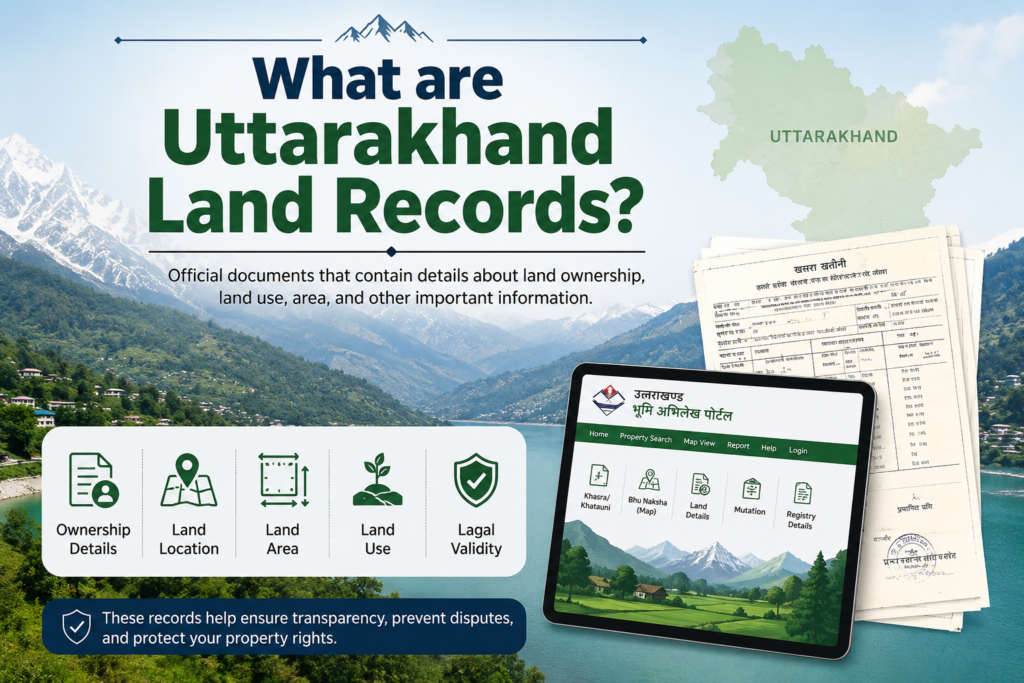
What are Uttarakhand Land Records?
Uttarakhand land records are official documents maintained by the Revenue Department that provide complete information about a parcel of land. These records establish ownership, land classification, area, location, revenue details, and other legal information.
They are commonly used during:
- Buying or selling land
- Property mutation
- Bank loan verification
- Legal disputes
- Agricultural records
- Government approvals
Every buyer should review Uttarakhand land records before making any payment because these documents reveal important legal facts that may not appear in the sale agreement.
Key Information Available in Uttarakhand Land Records
| Information | Purpose |
|---|---|
| Khasra Number | Identifies the individual plot of land. |
| Khata Number | Identifies the account of the landowner. |
| Owner’s Name | Confirms the legal owner of the property. |
| Area | Shows the total land size. |
| Nature of Land | Indicates whether the land is agricultural, residential, forest, etc. |
| Varg | Specifies the legal category or class of the land. |
| Remarks | Highlights restrictions, disputes, or government notes. |
Understanding these entries helps buyers make informed decisions and reduces the risk of legal complications.
What is Varg in Uttarakhand Land Records?
The word “Varg” means category or class of land. It is one of the most important entries found in Uttarakhand land records because it tells you how the government has classified a particular land parcel.
Instead of treating all land the same, the Revenue Department divides land into different categories based on ownership, intended use, and legal status. These categories help determine whether the land can be privately owned, transferred, cultivated, or developed.
When people search for Uttarakhand Varg Ka Kha Ga Gha, they are usually trying to understand the meaning of these revenue categories before buying land.
Why is Varg Important?
The Varg classification influences several important decisions, including:
- Whether the land can legally be bought or sold.
- Whether construction may be permitted.
- Whether additional permissions are required.
- Whether the land belongs to the government or the community.
- Whether there are restrictions on transfer or development.
Ignoring the Varg category can result in purchasing land that may not be suitable for your intended use.
Why Every Land Buyer Should Understand Uttarakhand Varg Ka Kha Ga Gha
Many buyers believe that if a property has a registered sale deed, it is automatically safe to purchase. In reality, the sale deed is only one part of the verification process. The land category recorded in Uttarakhand land records is equally important.
Imagine purchasing land to build a farmhouse. Later, during the approval process, you discover that the land falls under a restricted category where construction is not allowed. Such situations can delay projects, increase costs, or even prevent development altogether.
This is why understanding Uttarakhand Varg Ka Kha Ga Gha is essential before making any investment decision.
Benefits of Checking the Varg
| Benefit | Why It Matters |
| Confirms Legal Status | Helps identify whether the land is privately owned or reserved. |
| Verifies Transfer Rights | Ensures the property can be legally transferred. |
| Identifies Construction Restrictions | Prevents future development issues. |
| Supports Better Investment Decisions | Reduces legal and financial risks. |
| Ensures Compliance | Helps buyers follow applicable land regulations. |
Common Land Categories Under Uttarakhand Varg Ka Kha Ga Gha
One of the most frequently searched topics in Uttarakhand land records is the meaning of the different Varg categories. Each category represents a specific legal classification and may have different rules regarding ownership, transfer, and development.
The table below provides a general overview.
| Varg Category | General Meaning | Private Ownership | Construction | Transfer |
| Ka (क) | Agricultural/Private Land | Generally Yes | Subject to applicable laws | Generally Allowed |
| Kha (ख) | Restricted/Special Category | Depends | Additional permissions may apply | Subject to restrictions |
| Ga (ग) | Government or Community Land | Generally No | Usually Restricted | Not generally transferable |
| Gha (घ) | Public Utility Land | No | Not permitted for private development | Not transferable |
The exact interpretation of a Varg category may vary depending on the applicable revenue records and local regulations. Therefore, buyers should always verify the specific status of the property with the concerned Revenue or Tehsil Office.
Varg Ka (क वर्ग): The Most Common Category for Private Ownership
Among all categories in Uttarakhand Varg Ka Kha Ga Gha, Varg Ka is generally considered the most suitable for private ownership.
This category often includes privately owned agricultural land with clear revenue records. Such land is commonly used for farming and, in certain cases, may also be suitable for farmhouse development or other permitted uses, subject to applicable laws and local approvals.
Common Features of Varg Ka
- Usually privately owned.
- Often used for agriculture.
- Revenue records are generally clear.
- Can typically be bought and sold in accordance with applicable laws.
- Suitable for long-term land investment.
Varg Kha (ख वर्ग)
After Varg Ka, another commonly seen category in Uttarakhand land records is Varg Kha. This category may include land that has certain restrictions or special legal classifications. The exact meaning can vary depending on the location, revenue records, and applicable government regulations.
Unlike Varg Ka, this category should always be verified carefully before buying.
Varg Kha may include:
- Land with limited transfer rights
- Government-controlled categories
- Land requiring special approvals
- Properties with specific revenue conditions
Things to Verify Before Buying Varg Kha Land
| Verification Point | Why It Matters |
|---|---|
| Transfer Rights | Confirm whether the property can legally be transferred. |
| Construction Permission | Check if development is allowed. |
| Revenue Classification | Verify the latest entry in the Khatauni. |
| Local Regulations | Rules may vary depending on the area. |
| Tehsil Verification | Obtain confirmation from the concerned Revenue Office. |
Practical Example
Suppose you find an attractive plot near Bhimtal at a price lower than nearby properties. During document verification, you notice that the land falls under Varg Kha.
Instead of assuming the property is a good bargain, you should verify why the category is different. There may be restrictions on transfer, land use, or construction that affect your future plans.
This is one reason why understanding Uttarakhand Varg Ka Kha Ga Gha is essential before investing.
Varg Ga (ग वर्ग)
Varg Ga is generally associated with government-owned or community-use land. These properties are usually reserved for public purposes and are not intended for private ownership or unrestricted sale.
Common examples include:
- Village common land
- Government land
- Community-use areas
- Land reserved for public benefit
Important Points
- Private ownership is generally not permitted.
- Construction is usually restricted.
- Sale and purchase are generally not allowed unless specifically permitted under law.
Practical Example
Imagine someone offers you a low-cost plot and claims that registration can be completed later. When you review the Uttarakhand land records, you discover that the property is classified as Varg Ga.
This should immediately raise questions. Buyers should never rely only on verbal assurances. Always verify the legal status of such land with the Revenue Department before proceeding.
Also Read – Land Measurement Units in Uttarakhand
Varg Gha (घ वर्ग)
Among the categories covered under Uttarakhand Varg Ka Kha Ga Gha, Varg Gha generally relates to land reserved for public infrastructure and government utilities.
Examples may include:
- Roads
- Water bodies
- Rivers
- Public drainage systems
- Government utility areas
Such land is generally reserved for public use and is not available for private ownership or construction.
Comparison of Uttarakhand Varg Ka Kha Ga Gha
The following table provides a simplified comparison of the four common Varg categories.
| Category | General Purpose | Ownership | Construction | Investment Suitability |
| Ka | Agricultural / Private Land | Generally Private | Subject to applicable laws | High |
| Kha | Restricted / Special Category | Depends | Additional permissions may apply | Medium (after verification) |
| Ga | Government / Community Land | Generally Government | Usually Restricted | Not Recommended |
| Gha | Public Utility Land | Government | Not Allowed | Not Suitable |
Note: The exact legal status of any property should always be verified from official revenue records and the concerned Tehsil or Revenue Office.
Land Category vs Land Use: What’s the Difference?
One of the biggest misconceptions among buyers is that land category and land use are the same. In reality, these are two different concepts.
Land Category (Varg)
The land category refers to how the Revenue Department classifies a property in Uttarakhand land records.
Examples:
- Ka
- Kha
- Ga
- Gha
Land Use
Land use refers to how the property is legally intended to be used.
Examples include:
- Residential
- Agricultural
- Commercial
- Industrial
- Institutional
- Forest
Comparison Table
| Land Category | Land Use |
| Revenue classification | Purpose of the land |
| Recorded in revenue records | Defined by planning and development authorities |
| Indicates legal status | Indicates permitted use |
| Example: Ka, Kha, Ga, Gha | Example: Residential, Agricultural, Commercial |
A buyer should always verify both the category and the permitted land use before making a purchase.
Note: Please do proper research before writing the article. Verify all information related to Uttarakhand Land Records, Varg (Ka, Kha, Ga, Gha), land use categories, and revenue terminology using official Uttarakhand government sources and other reliable references.
Why Buyers Should Read Every Entry in Uttarakhand Land Records
Many property disputes arise because buyers focus only on ownership details and ignore the remaining entries in the revenue records.
A careful review of Uttarakhand land records can reveal:
- The actual category of the land.
- Whether restrictions apply.
- Whether the land is agricultural or residential.
- Whether government claims exist.
- Whether additional permissions may be required.
Understanding these details helps buyers make informed decisions and reduces the risk of future legal complications.
How to Check Uttarakhand Land Records Before Buying Property
Understanding Uttarakhand land records is only useful if you know how to read them correctly. Before purchasing any land, buyers should carefully examine the revenue records instead of relying only on the seller’s statements or the sale deed.
The Khatauni and Khasra records contain valuable information about ownership, land category, land use, area, and legal remarks. Spending a few minutes reviewing these records can help avoid future legal disputes and financial losses.
Read More – Uttarakhand Land Records Legal Documents To Check Before Buying A Plot
Step-by-Step Guide to Verifying Land Records
| Record Field | What You Should Check | Why It Is Important |
|---|---|---|
| Khasra Number | Verify that the plot number matches the property. | Confirms the identity of the land parcel. |
| Khata Number | Check the owner’s account details. | Ensures the property belongs to the correct account holder. |
| Owner’s Name | Match the name with the seller’s identity documents. | Confirms legal ownership. |
| Land Area | Compare the recorded area with the actual site. | Prevents disputes regarding land size. |
| Varg | Verify the category under Uttarakhand Varg Ka Kha Ga Gha. | Helps determine ownership and development rights. |
| Nature of Land | Check whether it is Abadi, Krishi, Banjar, etc. | Confirms the permitted use of the property. |
| Remarks | Look for government claims, disputes, or restrictions. | Identifies potential legal issues before purchase. |
Documents Every Buyer Should Verify
Apart from checking Uttarakhand land records, buyers should also verify supporting documents before completing a property transaction.
| Document | Purpose |
| Khatauni | Ownership and land category |
| Khasra | Plot identification |
| Sale Deed | Proof of previous ownership transfer |
| Mutation Records | Shows whether ownership has been updated in revenue records |
| Encumbrance Details | Confirms whether loans or legal claims exist |
| Identity Proof of Seller | Verifies the seller’s identity |
| Master Plan (if applicable) | Confirms future zoning and land use |
Verifying these documents helps reduce the chances of fraud and ensures that the property is legally suitable for your intended purpose.
Common Mistakes Buyers Make
Many land buyers focus only on the location and price, but overlooking revenue records can lead to serious complications. Here are some common mistakes:
1. Ignoring the Land Category
Many buyers never check whether the property falls under Uttarakhand Varg Ka Kha Ga Gha. The category can affect ownership rights, transfer eligibility, and development permissions.
2. Not Reading the Khatauni
Some buyers rely only on the sale deed. However, the Khatauni contains important details about ownership, land classification, and legal remarks.
3. Assuming Agricultural Land Can Always Be Developed
Agricultural land is primarily meant for farming. Depending on applicable laws and local regulations, additional permissions may be required before construction.
4. Overlooking Government Restrictions
Land located in forest areas, eco-sensitive zones, or public utility categories may have restrictions on construction or transfer.
5. Failing to Verify Measurements
Always compare the recorded land area with the actual site measurements to avoid future disputes.
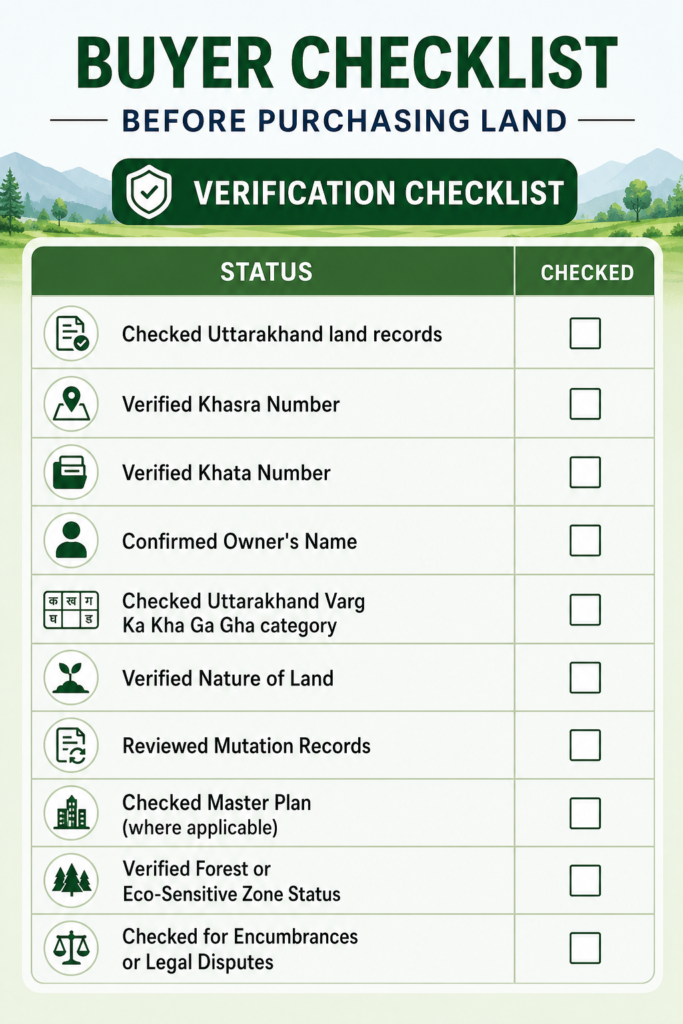
Buyer Checklist Before Purchasing Land
Why Understanding Land Records is Important for Long-Term Investment
Whether you are purchasing land for agriculture, residential development, a farmhouse, or future investment, understanding Uttarakhand land records gives you greater confidence in your decision.
Similarly, understanding Uttarakhand Varg Ka Kha Ga Gha allows you to identify potential restrictions before investing. This helps buyers avoid unnecessary legal complications and choose land that aligns with their intended use.
A careful review of revenue records today can save significant time, money, and effort in the future.
Conclusion
Buying land is one of the most significant financial decisions a person can make. While location, price, and accessibility are important, understanding Uttarakhand land records is equally essential for making a safe and informed investment.
By learning about Uttarakhand Varg Ka Kha Ga Gha, reviewing the Khatauni carefully, verifying ownership, and checking the legal status of the property, buyers can reduce risks and make better decisions. Whether you are planning to invest in agricultural land, residential plots, or long-term real estate, spending time understanding the revenue records is a valuable step toward protecting your investment.
Always verify official records and consult the concerned Revenue or Tehsil Office whenever you have questions regarding a property’s legal status or permitted
Frequently Asked Questions (FAQs)
What is Varg in Uttarakhand land records?
Varg is the official land category recorded in Uttarakhand land records. It indicates the legal classification of land, such as agricultural, government, community, or public utility land.
What is the difference between Ka, Kha, Ga, and Gha in Uttarakhand?
Ka: Generally private agricultural land.
Kha: Land with certain restrictions or special conditions.
Ga: Government or community land.
Gha: Public utility land, such as roads or water bodies.
What is Khatauni in Uttarakhand?
Khatauni is a revenue record that contains details such as the owner’s name, Khasra Number, land area, and land category (Varg).
What is a Khasra Number in Uttarakhand?
A Khasra Number is a unique identification number assigned to a specific plot of land in the revenue records.
What are the land use categories in Uttarakhand?
Common land use categories include Agricultural (Krishi Bhoomi), Residential (Abadi), Commercial, Forest Land, Banjar, and Charagah (Grazing Land).
Why are revenue records of Uttarakhand important?
Revenue records of Uttarakhand help verify ownership, land category, plot details, and any legal restrictions before buying or selling land.
What does Varg mean in land records?
Varg refers to the category or classification of land recorded in government revenue records. It identifies the legal nature and intended use of the land.
Where can I check the Varg of a property?
The land category can usually be found in the Khatauni and other official revenue records maintained by the Revenue Department.