
Every place has a story, and Uttarakhand has countless stories waiting to be told. Some can be found in its beautiful mountain villages, some in its old temples and traditional festivals, while others live in the memories of people who call this land home.
Every year, 9 November is celebrated as Uttarakhand Foundation Day, also known as Uttarakhand Sthapana Diwas or Uttarakhand Rajya Sthapana Diwas. On this day in 2000, Uttarakhand became a separate state, initially under the name Uttaranchal. The name was officially changed to Uttarakhand in 2007. In 2026, the state marks 26 years of its formation — a journey shaped by its people, culture, identity and aspirations.
But celebrating Uttarakhand is not just about remembering its history. It is also about appreciating everything that makes this state special today.
One such part of Uttarakhand is Kumaon, a region where every town has something different to offer. As we celebrate Uttarakhand Foundation Day 2026, it is a good time to appreciate what makes this region so special. Think of Nainital’s beautiful lakes, Mukteshwar’s quiet mountain views, Almora’s cultural heritage and Haldwani’s lively markets. Each place has its own identity, and together they make Kumaon a region full of character.
Beyond its scenic beauty, Kumaon has a rich food culture, local festivals, traditional art and a lifestyle deeply connected to its surroundings. At the same time, tourism, better connectivity and growing towns are bringing new changes to the region.
Uttarakhand is made up of 13 districts, divided between two regions: Garhwal and Kumaon. While Garhwal has seven districts, Kumaon consists of six — Nainital, Almora, Bageshwar, Champawat, Pithoragarh and Udham Singh Nagar. Each district has its own landscape, culture, local traditions and identity. Together, they make Uttarakhand a state with remarkable diversity, from its hill towns and mountain villages to its plains and growing cities.
So, on this Uttarakhand Foundation Day, let’s take a closer look at Kumaon — its culture, its beautiful destinations and the development shaping its future.
Table of Contents
1. Uttarakhand’s Journey: More Than 26 Years of Identity and Progress
Uttarakhand was formed on 9 November 2000, when it was separated from Uttar Pradesh under the Uttar Pradesh Reorganisation Act, 2000. Initially named Uttaranchal, the state was officially renamed Uttarakhand in 2007.
The formation of the state represented the aspirations of people who wanted greater recognition for the region’s geographical conditions, cultural identity and development needs.
Over the years, Uttarakhand has developed across several sectors, including tourism, education, infrastructure, agriculture and hospitality. Its mountain destinations continue to attract visitors, while its growing towns are becoming important centres for commerce and everyday services.
However, development in a mountain state comes with its own considerations. Difficult terrain, environmental sensitivity, connectivity and access to essential facilities all influence how different areas grow.
Today, Uttarakhand’s journey is not only about economic development but also about finding a balance between modern facilities and the natural and cultural heritage that define the state.
2. Understanding Kumaon: A Region with Six Different Stories
Kumaon is one of the two administrative divisions of Uttarakhand, the other being Garhwal. Located in the eastern part of the state, it has a landscape that changes considerably as one travels from the Himalayan hills towards the plains.
The division consists of six districts, each with its own geographical character, local traditions and economic activities.

A Closer Look at Kumaon’s Six Districts
| District | Headquarters | Regional Identity |
| Nainital | Nainital | Lakes, tourism, education and hill settlements |
| Almora | Almora | Cultural heritage, traditional markets and temples |
| Bageshwar | Bageshwar | Religious heritage, rivers and mountain landscapes |
| Champawat | Champawat | Historical sites, temples and traditional settlements |
| Pithoragarh | Pithoragarh | Himalayan valleys, mountain villages and border landscapes |
| Udham Singh Nagar | Rudrapur | Agriculture, industries and commercial activity |
What makes this geographical diversity interesting is that the needs and opportunities of each district are different.
For instance, a tourism-based business in Mukteshwar may have very different requirements from a commercial establishment in Rudrapur. Similarly, the infrastructure considerations for a property in a remote mountain village cannot be compared directly with those of a developing urban locality.
Understanding these differences is important for anyone looking to explore Kumaon beyond its popular tourist image.
Nainital: Where Tourism Meets Everyday Life
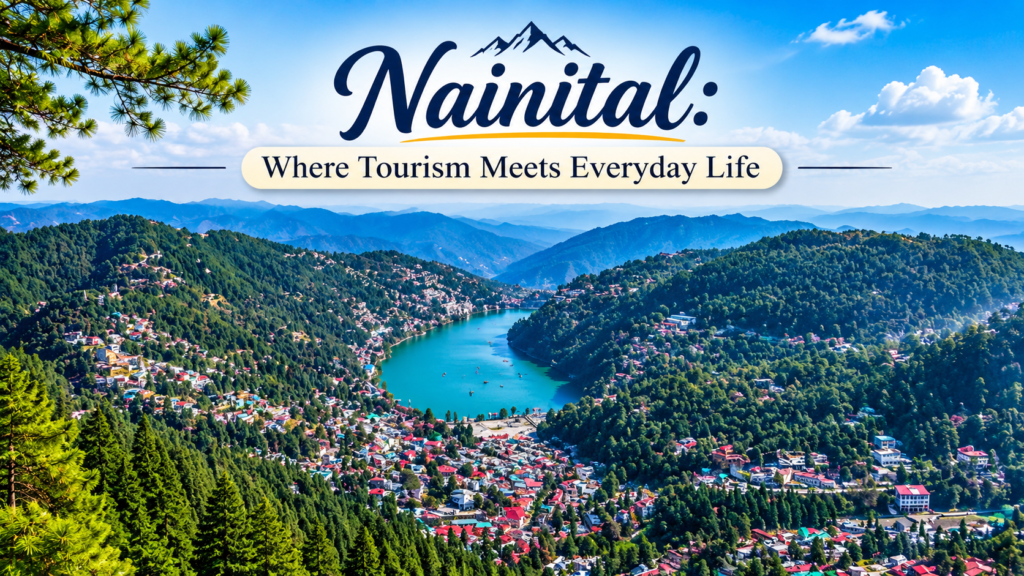
Nainital is one of the most recognised destinations in Kumaon. Its famous Naini Lake, surrounding hills, colonial-era architecture and lively markets have made it a popular destination for generations of travellers.
However, the district extends well beyond Nainital town. Places such as Bhimtal, Sattal, Naukuchiatal, Ramgarh and Mukteshwar offer different experiences, from peaceful lakeside surroundings to fruit orchards and mountain views.
The district also has an important residential and educational presence, making it relevant to more than just tourism.
Read More – 10 Best Places to Invest in Kumaon in 2026 | Square Foot Investor
Almora: A Living Connection to Kumaoni Heritage

Almora has a character that is closely connected to the history and traditions of Kumaon. Its old markets, traditional houses, temples and local food give visitors a glimpse of the region’s cultural life.
Kasar Devi, Jageshwar and Katarmal are among the destinations that reflect the district’s historical and spiritual importance.
Unlike destinations that are known primarily for their scenic views, Almora offers an opportunity to understand the cultural side of mountain living.
Bageshwar: A Blend of Spirituality and Nature
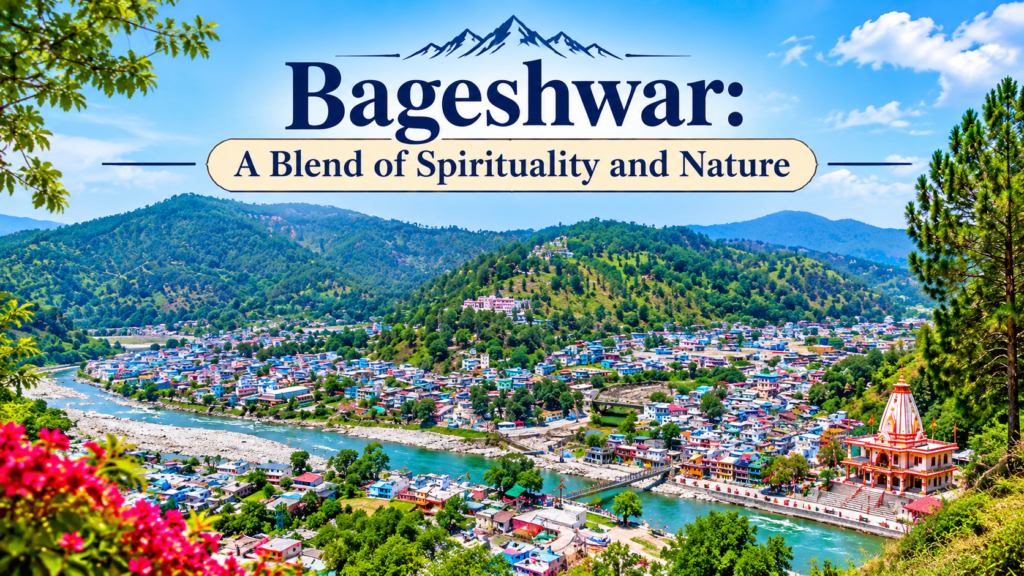
Bageshwar is known for the confluence of the Saryu and Gomti rivers and the historic Bagnath Temple. Its natural surroundings and religious importance make it a significant destination in Kumaon.
The district also connects travellers with mountain routes and villages where traditional lifestyles remain an important part of local identity.
Champawat: Discovering Kumaon’s Historical Roots
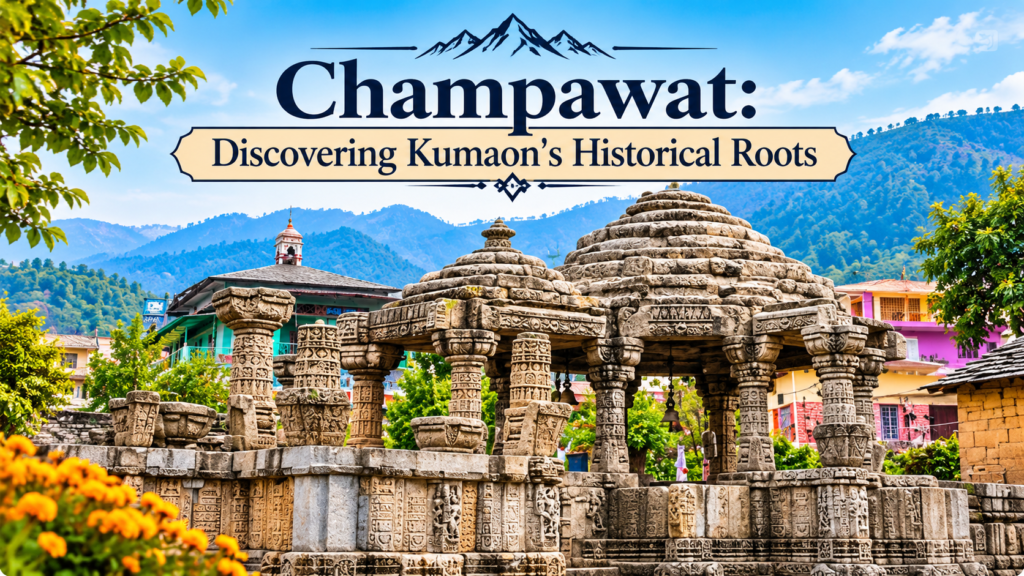
Champawat is an important part of Kumaon’s historical landscape. Its temples, traditional settlements and heritage sites offer a different perspective on the region.
Baleshwar Temple and Mayawati Ashram are among the places that attract visitors interested in history, spirituality and peaceful surroundings.
Pithoragarh: The Himalayan Side of Kumaon
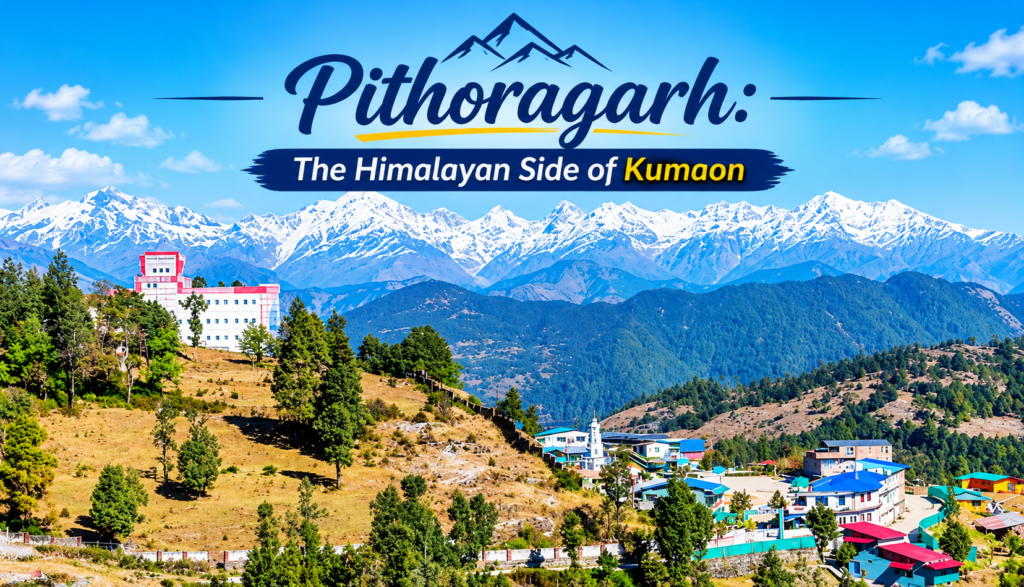
Pithoragarh is known for its dramatic mountain scenery, valleys and proximity to the Himalayan border regions. Munsiyari, in particular, is appreciated for its views of the Panchachuli peaks and opportunities for trekking and mountain exploration.
The district also highlights the importance of remote mountain communities and the need for better connectivity and essential services.
Udham Singh Nagar: The Commercial and Agricultural Side

Udham Singh Nagar offers a very different picture of Kumaon. With largely plain terrain, fertile agricultural land and established industrial areas, it plays an important role in the region’s economic activity.
Rudrapur, Kashipur, Kichha and other urban centres contribute to its commercial and industrial presence. This makes the district an important link between the hill region and the plains.
3. The Destinations That Give Kumaon Its Tourism Identity
Kumaon’s tourism appeal is not limited to a single hill station. Its destinations offer different experiences depending on what a visitor wants to explore.
Some come for lakes and pleasant weather, others for wildlife, spiritual experiences, trekking or simply a break from busy city life.
The following destinations also show how different the tourism experiences of Kumaon can be.
| Destination | District / Area | Known For |
| Nainital | Nainital | Naini Lake, boating and mountain views |
| Bhimtal | Nainital | Lakeside stays and peaceful surroundings |
| Mukteshwar | Nainital | Himalayan views, orchards and nature stays |
| Ranikhet | Almora | Pine forests and mountain scenery |
| Kausani | Bageshwar | Panoramic views of Himalayan peaks |
| Jageshwar | Almora | Ancient temples and deodar forests |
| Munsiyari | Pithoragarh | Panchachuli views and trekking |
| Jim Corbett National Park | Nainital region | Wildlife and forest tourism |
What makes these places interesting is that they serve different kinds of travellers. A family planning a short holiday may prefer Nainital or Bhimtal, while someone interested in quieter surroundings may choose Mukteshwar or Kausani. Wildlife enthusiasts often look towards Jim Corbett, while history and spirituality bring visitors to Jageshwar.
There are also smaller villages and lesser-known locations that deserve attention. Exploring these places can help visitors understand the region beyond its most photographed destinations.
4. The Cultural Soul of Kumaon: Traditions That Still Matter
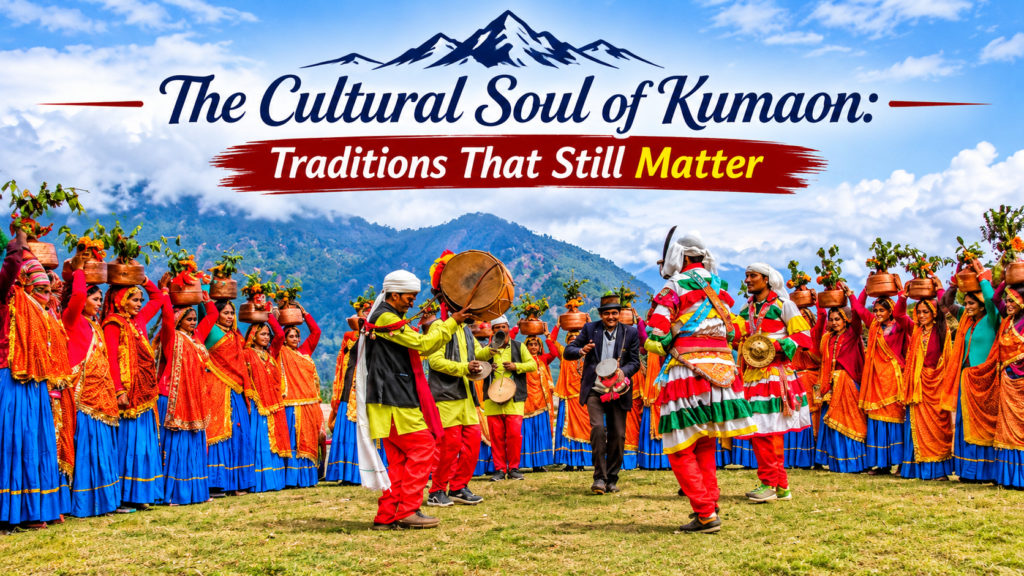
A visit to Kumaon is incomplete without experiencing its culture. The region has maintained a strong connection with its traditional music, festivals, local architecture and food.
One of the most interesting aspects of Kumaoni culture is how closely it is connected to nature and seasonal changes. Many traditional celebrations reflect agricultural practices, changing seasons and community life.
Read More – Understanding kumaon : Six Districts, Six Different Stories
Festivals That Reflect Local Traditions
| Festival | Cultural Significance |
| Harela | Celebrates greenery, agriculture and the arrival of the monsoon season |
| Uttarayani | A traditional festival associated with Makar Sankranti and local fairs |
| Ghughutiya | A Kumaoni celebration involving traditional sweet preparations and bird-feeding customs |
| Hilljatra | A traditional agricultural folk festival celebrated in parts of Pithoragarh |
| Ghee Sankranti | Associated with the harvest season and agricultural traditions |
Harela is particularly meaningful because it reflects the community’s relationship with nature. Ghughutiya, on the other hand, is known for its traditional sweet preparations called ghughute, which are shaped into small decorative pieces.
Traditional Food: A Taste of Kumaon’s Identity

Food is another way to understand the lifestyle of a region. Kumaoni cuisine traditionally uses locally available ingredients, seasonal vegetables, pulses and grains.
Some dishes worth knowing include:
- Bhatt Ki Churkani: A traditional preparation made with black soybeans, usually enjoyed with rice.
- Aloo Ke Gutke: Spiced potato pieces commonly served with local chutneys.
- Kafuli: A traditional dish prepared using leafy green vegetables.
- Chainsoo: A flavourful preparation made from roasted black gram.
- Bal Mithai: A popular regional sweet, especially associated with Almora.
- Singori: A traditional sweet made with khoya and wrapped in a leaf.
These dishes are not simply part of the local menu; they represent generations of food traditions and the way people have adapted their cooking to the resources available in the mountains.
5. How Kumaon Is Changing: Tourism, Infrastructure and Lifestyle

Kumaon today is experiencing changes that go beyond tourism. Growing towns, improved access to services, commercial activity and changing lifestyle preferences are influencing how people live and work across the region.
Haldwani is an important example. Often considered a major gateway to Kumaon, the city connects the plains with several hill destinations. It also serves as a centre for education, healthcare, shopping, transport and commercial activity.
Other towns are developing in their own ways. Rudrapur has an established industrial presence, Ramnagar is closely connected with wildlife tourism, while Nainital district’s surrounding destinations have attracted interest in hospitality and second-home living.
Understanding the Different Growth Centres of Kumaon
| Location | Development Focus | Why It Matters |
| Haldwani | Commercial, residential and urban infrastructure | Important service and connectivity centre |
| Ramnagar | Tourism and hospitality | Gateway to Jim Corbett and surrounding destinations |
| Rudrapur | Industrial and commercial activity | Employment and business opportunities |
| Bhimtal | Tourism and residential development | Lakeside location and hospitality interest |
| Mukteshwar | Tourism and hospitality | Nature-based stays and scenic surroundings |
| Nainital | Tourism, education and services | Established hill-town economy |
Development, however, does not happen in the same way everywhere. A town with established markets and healthcare facilities has different growth requirements from a remote mountain destination.
For long-term progress, improvements in road connectivity, public transport, water supply, waste management and essential services are just as important as new commercial projects.
6. Kumaon’s Real Estate Landscape: Understanding the Opportunities Beyond Tourism
As more people become familiar with Kumaon, interest in its property market has also expanded. Some buyers look for residential plots or homes, while others explore hospitality projects, holiday properties and land for long-term use.
But it is important to understand that real estate opportunities across Kumaon are not all the same. The suitability of a location depends on its accessibility, local demand, infrastructure, land-use regulations and the purpose for which the property is being considered.
What Is Driving Interest in Kumaon’s Property Market?
1. Tourism and Hospitality
Popular destinations and surrounding areas attract visitors throughout the year, although demand varies by season and location. This has created interest in hotels, resorts, homestays and other hospitality-related properties.
2. Demand for Residential Spaces
Some buyers are interested in homes away from crowded cities, while others look for residential plots in locations with access to essential facilities. The actual suitability of a property depends on its location and local development conditions.
3. Growing Urban Centres
Haldwani and Rudrapur have different economic roles within Kumaon. Their commercial activity, educational facilities, healthcare services and connectivity make them important locations to understand when studying the regional property market.
4. Interest in Land Investment
Land attracts buyers for different reasons, including residential use, hospitality development and long-term ownership. However, land investment requires careful assessment of ownership records, legal permissions, access roads, land classification and applicable state regulations.
Important Factors to Check Before Investing in Kumaon
| Factor | What Buyers Should Evaluate |
| Location | Distance from markets, hospitals, schools and transport facilities |
| Documentation | Ownership records, title history and legal verification |
| Land Use | Permitted use and applicable local regulations |
| Connectivity | Road access and availability of transport |
| Basic Facilities | Water, electricity, drainage and other essential services |
| Development Potential | Actual demand, surrounding development and future infrastructure plans |
| Environmental Considerations | Slope stability, drainage, forest restrictions and ecological sensitivity |
A property that looks attractive because of its mountain views may not necessarily be suitable for every buyer or investment purpose. Practical details often matter more than the first impression.
At Square Foot Investor, we believe that understanding a location is an important part of making a property decision. Our work across destinations such as Haldwani, Ramnagar, Bhimtal, Mukteshwar and other parts of Uttarakhand focuses on helping buyers explore available property options with attention to location, documentation and local market conditions.
The objective should always be to make an informed decision rather than choosing a property simply because a destination is popular.
7. Development Without Losing Kumaon’s Natural Identity
One question that deserves attention as Kumaon develops is how the region can grow without losing the qualities that make it special.
The mountains, forests, rivers and lakes are not just attractions for visitors. They support local livelihoods, agriculture, biodiversity and everyday life.
Unplanned construction, improper waste disposal and excessive pressure on natural resources can create long-term challenges, especially in environmentally sensitive mountain areas.
A more responsible approach to development should include:
- Planning construction according to local geography and applicable regulations.
- Protecting forests, natural water sources and existing green spaces.
- Improving waste management in tourist destinations.
- Encouraging responsible tourism and supporting local businesses.
- Preserving traditional architecture and cultural practices wherever possible.
- Considering water availability, drainage and slope stability before construction.
The future of Kumaon should not be measured only by the number of new projects or visitors it attracts. It should also be measured by the quality of life it offers its residents and the condition of its natural surroundings.
8. What Makes Kumaon Special Is What It Carries Into the Future
Kumaon’s identity has been shaped over generations, and its future will depend on how thoughtfully its natural and economic resources are used.
Its cultural heritage, traditional food, festivals and mountain communities give it a character that cannot be recreated simply through modern development. At the same time, better infrastructure, responsible tourism and well-planned urban growth can create new opportunities for the region.
This balance is particularly important for places like Haldwani, Ramnagar, Bhimtal and Mukteshwar, where development, tourism and changing residential preferences are increasingly connected.
As the region moves forward, the aim should be to create opportunities while respecting its local identity. That is what can make Kumaon’s growth meaningful in the long run.
Conclusion: Celebrating the Beauty, Heritage and Future of Uttarakhand
Uttarakhand Foundation Day is a reminder of the state’s journey, its people and the values that continue to shape its identity.
Kumaon represents an important part of that story. Its six districts, beautiful destinations, cultural traditions and growing towns together reflect a region that has both a rich past and an evolving future.
Whether someone visits to experience its mountains, explores its traditional culture or studies its emerging development opportunities, Kumaon offers much more than a holiday destination.
On 9 November 2026, let us celebrate not only the beauty of Uttarakhand but also the people, traditions and natural heritage that make it truly special.
Happy Uttarakhand Foundation Day 2026!
— Team Square Foot Investor
Frequently Asked Questions (FAQs)
1. When is Uttarakhand Foundation Day celebrated?
Uttarakhand Foundation Day is celebrated every year on 9 November, marking the formation of the state in 2000.
2. Which locations are important commercial centres in Kumaon?
Haldwani and Rudrapur are important commercial and service centres, while Ramnagar also has a significant role in tourism-related activity.
3. Which are the best-known tourist destinations in Kumaon?
Nainital, Bhimtal, Mukteshwar, Ranikhet, Kausani, Jim Corbett, Jageshwar and Munsiyari are among its well-known destinations.
4. What should buyers check before purchasing land in Kumaon?
Buyers should verify ownership records, title history, land classification, applicable purchase permissions, road access and environmental or construction restrictions befor
5. Is Kumaon suitable for property investment?
Certain locations may offer residential or hospitality-related opportunities, but suitability depends on legal permissions, land-use rules, documentation, infrastructure and individual investment objectives.